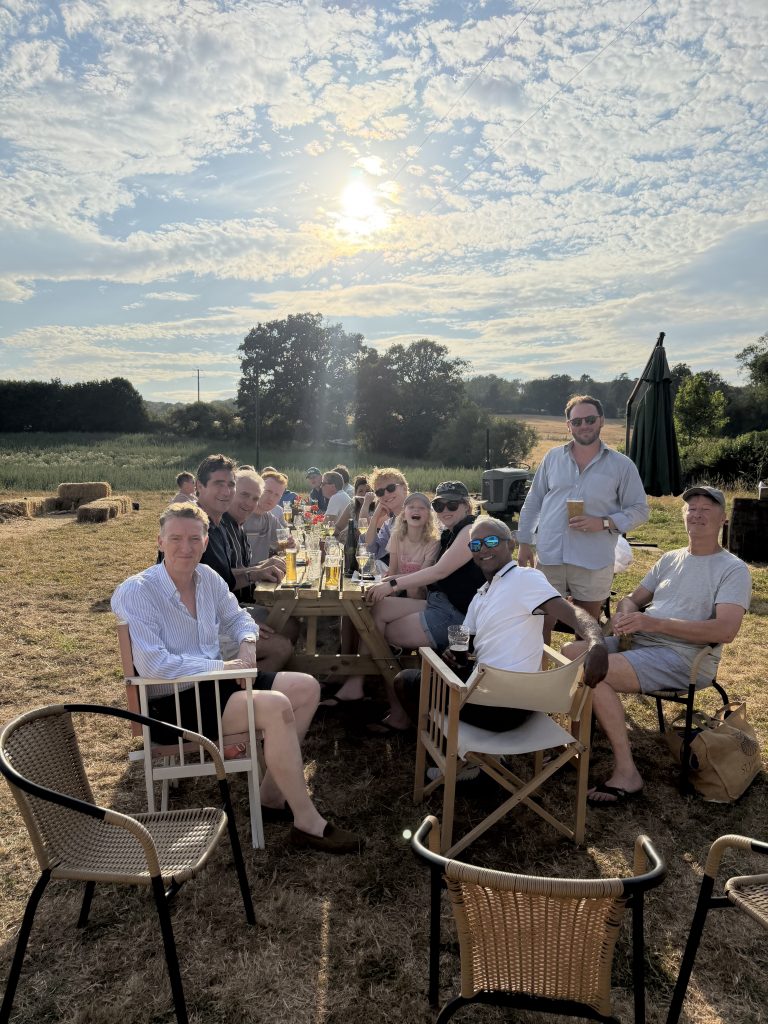

V&A XI: D. Pitlarge, T. Bird, N. Constantine, T. Walsh, J. Tetlow (c), C. Kulasingam, J. Arnold, A. Pitlarge, A. Jacot, I. Krunic, E. Nicoli.
N. Constantine 85*, 3-25
A. Jacot 3-11
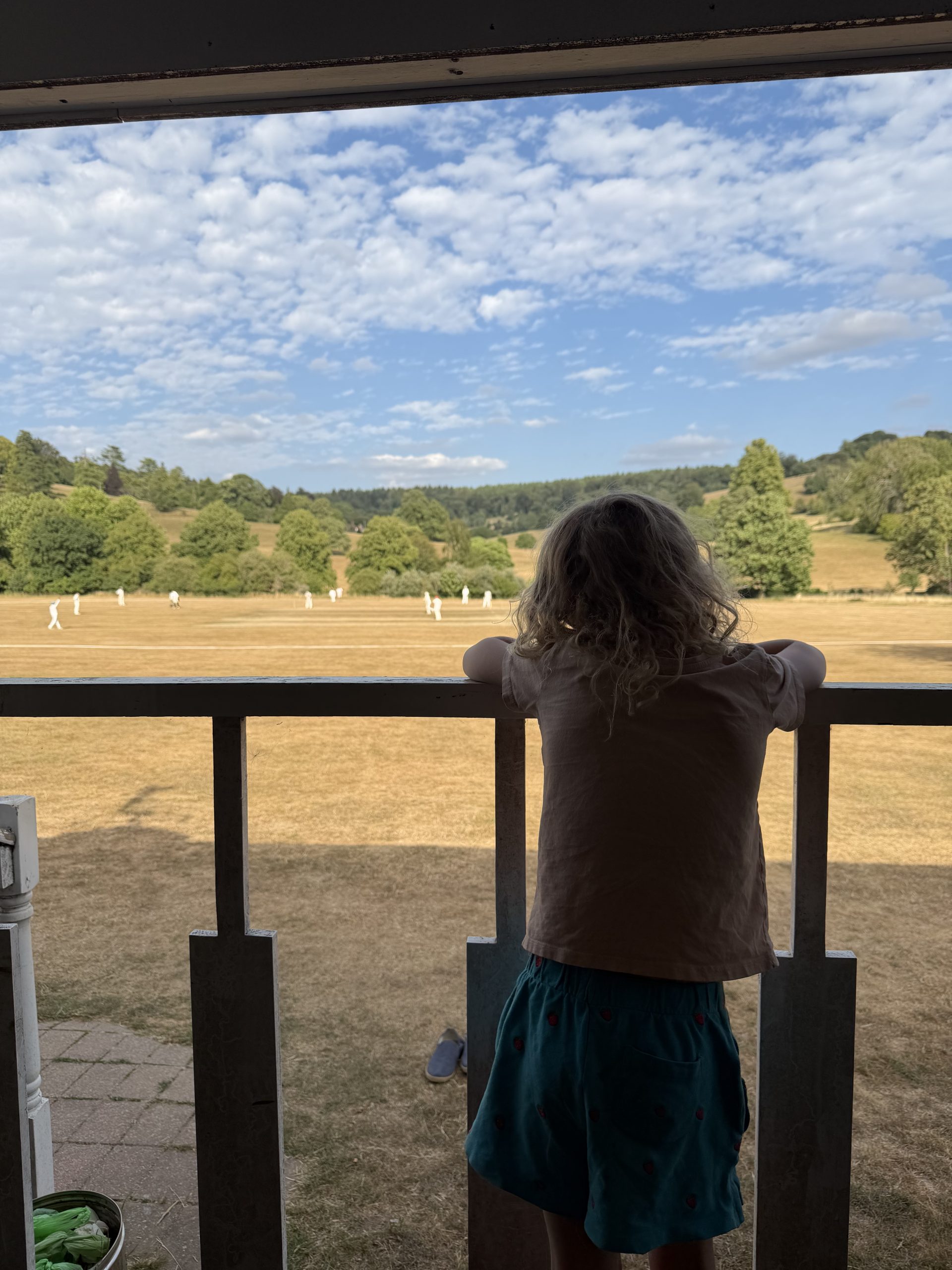
I have played a good deal of cricket at Stonor, and I have never seen the ground this colour. The grass had gone the yellow of an old lion, the outfield baked to straw, the whole place given over to a sort of Home Counties savannah. A first-timer might have been forgiven for scanning the long grass at long-on for something with horns, or for wondering how the tawny country of Karen Blixen’s Africa had been relocated, at no small expense, to the Chilterns.
One of the reasons we love the place is that the modern world cannot reach it. There is barely a bar of signal on the whole ground. We had the proof of that before a ball was bowled, when a passing cyclist came off into a ditch and damaged his machine past riding. He could not summon his recovery crew either, having nothing to summon them with, and walked up to the pavilion to throw himself on our mercy. We did what the regulars do. We sent him to the two or three spots where a signal can sometimes be coaxed out of the air: the top of the rise, or the pavilion bench with an arm held aloft like a man hailing a cab.
The Howitzers proved good and knowledgeable company, the sort of side that seems to know a little about most things, and it was they who supplied the day’s history lesson in the absence of Radio Bird. The older heads among them studied our scorched outfield and pronounced, with the confidence of men who were there, “1976”. I had not, being some distance from these shores at the time. With no signal to check them, I took it on trust.
They had a point. 1976 was the great drought, the summer the reservoirs ran so low that the government appointed a minister for it, whereupon it rained for a fortnight. It was also the summer a world-beating West Indies side toured, after England’s captain, Tony Greig, had promised to make them “grovel”. It is exactly the sort of unhedged, perhaps unhinged, claim any management consultant is trained to keep well out of a pitch. The West Indies won the series three-nil. The old film of that August at The Oval shows an outfield burnt to the very straw we were standing on. The Oval is a well-watered green today. It is the lanes of Oxfordshire that have taken on the colour of the archive.
To the cricket. The captaincy revolves at the V&A, and this week the armband belonged to J. Tetlow. He won the toss and chose to bat. On a surface this dry and skiddy, there was no other sensible call. D. Pitlarge and T. Bird put on 28 before the elder Pitlarge was run out for a busy 10. Bird, T is a cross-batter by conviction. Most of his runs are bludgeoned and carved to the leg side, but he found room in his 39 for one sumptuous drive through extra cover. Pearson eventually bowled him. That brought in the man who would decide the innings. N. Constantine came early and, in the manner of a tenured incumbent, showed no inclination to leave.
One learns something at Stonor most weeks, and it is seldom about cricket. A knowledgeable opposition fielder explained the droppings scattered across the unused strips. They are the work of rabbits: they prefer the open, close-cropped ground to the long stuff, the better to watch for trouble while they go about their business. I have filed the fact away against the day it proves useful.
Lunch, under the one tree still trading in shade. The lunchtime address is a V&A institution, and ordinarily it falls to N. Bird, a man whose relationship with the facts, on any subject you care to name, has always been more nodding acquaintance than close friendship. In his absence the duty passed to his nephew, the same T. Bird who had opened the batting. He used it to remind the table, and rather pointedly the skipper, that Tetlow has never lost a match in charge of the V&A. There are things one simply does not say out loud. I have watched calmer men than Tetlow walk out to bat.
To his enormous credit, the skipper answered it. Tetlow made an unbeaten 50 of real backbone, and Constantine, still there when our 35 overs ran out, had reached a quite magnificent 85. Their unbroken stand of 113 never looked like breaking, and we finished on 246 for three.
Which brings me, with some reluctance, to my own afternoon. There is a phrase for the cricketer who neither bats nor bowls and drifts through a fixture leaving no mark on it: we thank him for coming. A niggling back had me picked as a batter-only this week, and the top order proved in no mood to need me. I could hear the phrase warming up. The covers saved me. Three chances came out there, only one of them straightforward. I spilled the third, comfortably the kindest of the lot. The skipper suffered the identical indignity, two taken from three and the best of them on the run from long-on, one put down off his own bowling. The sight of two outfielders clinging to the hard chances and fluffing the easy ones gave the cordon plenty to discuss.
The chase itself was not the stroll the final margin makes it look. Constantine, having made the runs, went and took the wickets too, three for 23, and Krunic removed Baker early to set us going. A. Pitlarge bowled with control and venom, only going for 11 off his opening spell of 5 overs. He was rightfully rewarded with a wicket later. Then A. Birkinshaw dug in, and played beautifully. He drove and pulled with real freedom, and as his score climbed the V&A grew quiet, in the way a fielding side goes quiet when a game it thought was won starts to feel less certain. Another twenty from him and this is a different report, and a far tighter one. We were spared it. The meticulous and wily Jacot had him caught for 43, the resistance departing with him, and then went through the rest for three for 11 in a shade over two overs. The Howitzers were all out for 157. The margin was 89, a figure that flatters us and rather libels them.
The best of the day’s talk I had saved, without knowing it, for last. A. Birkinshaw, who had given us that fright, turned out to be up from Manchester for the weekend, snatching a game with his father I. Birkinshaw while visiting family in the south. He spoke of a summer up north of genuine forest fires, of windows kept shut in 30c+ degree heat, against the smell of smoke. It has stayed with me. The older heads had looked at our yellow outfield and seen 1976, a freak to be enjoyed and filed under fond memory. Birkinshaw the younger looked at the same colour and saw next summer, and the one after. The truth may sit somewhere between them. For now, the ground wears the colour of a good story rather than a warning, and the skipper’s record survives to torment whoever inherits it. On the drive home, out of signal and in no hurry to be back in range, I caught myself hoping the older heads had it right.